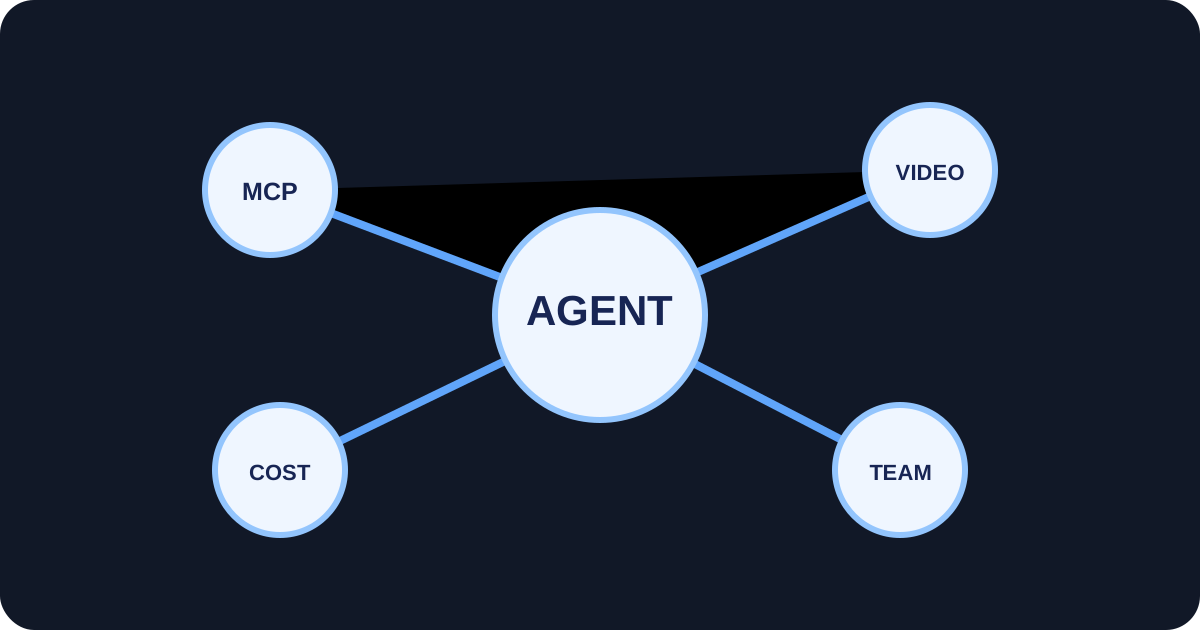
OpenWork is a desktop workspace for running and sharing AI workflows without tying every workflow to one chat client. Its practical appeal is portability: skills, plugins and MCP connections can be organized in one place and used from compatible agents.
That description needs one qualification. The OpenWork repository currently uses a split license: most code outside the ee/ directory is MIT-licensed, while enterprise components use the OpenWork Enterprise Edition license. “Open source” therefore describes the core and desktop code, not every organizational feature.
What the architecture changes
A typical setup scatters configuration across desktop apps, editor extensions and command-line tools. OpenWork provides a workspace where reusable capabilities can be assembled and exposed to the agent you already use. It cannot make incompatible tools portable: each client still needs the required protocol support and credentials.
The repository separates the desktop experience from Den, its organization-oriented control plane. A solo local workflow and a centrally governed team installation consequently have different security, licensing and maintenance requirements.
A sensible evaluation path
- Follow the repository’s current setup instructions; it presently specifies Node.js 24 and pnpm 11.
- Start with a disposable workspace and one non-sensitive skill.
- Connect one MCP server with a narrowly scoped credential.
- Verify what the desktop app, agent and remote service can see.
- Introduce sharing only after the local path is understood.
If an MCP tool is not called, inspect the real protocol traffic with our mcpsnoop guide. Before production use, review current license files and release notes, and inventory every token accessible to the workspace.
Bottom line
OpenWork is agent-workflow infrastructure, not merely a replacement chat interface. It best fits developers using several agent clients who value reusable configuration. Its main evaluation questions are licensing boundaries, credential handling and whether another workspace actually reduces operational friction.
Primary source: OpenWork repository and documentation.